Home Monument types Motte and bailey castle
What is a motte and bailey castle?
A motte and bailey castle is an early form of castle with a steep-sided, flat-topped earthen mound (the motte) that carried a timber tower, and one or more embanked enclosures (baileys). The Normans introduced the type to England and Wales after 1066.
- Period
- Medieval, from 1066 to the 13th century; most built in the late 11th and 12th centuries.
- Also called
- motte, motte castle, earth and timber castle, bailey
- Pages on Waystone
- 475 in England and Wales
What a motte and bailey castle is
The motte was a mound of earth or rubble topped by a palisade and tower, and the bailey was a courtyard alongside it, enclosed by a bank and ditch, which usually held the domestic buildings. Historic England records over 600 motte castles and motte and bailey castles in England, and published surveys count about 741 in England and Wales. Mottes largely ceased to be built in England after about 1170 but continued to be built in Wales and the Marches, including by Welsh rulers from the early 12th century. Most mottes in England and Wales are less than 5 metres high, and only about 7 per cent are more than 10 metres high. Many castles were abandoned, while others were rebuilt in stone, often with a shell keep on the motte.
How motte and bailey castles look on LiDAR
A motte shows as a steep-sided, flat-topped mound, usually with a ditch around its base, and the bailey as an adjoining enclosure, often kidney-shaped, defined by a bank and ditch. Hillshade shows the steep sides of the motte clearly, and sky-view factor or negative openness shows the ditches around the motte and bailey. A local relief model shows low features in the bailey, such as building platforms, and nearby earthworks such as fishponds and hollow ways.
See LiDAR visualisations explained for what each method shows.
What can look like one
Windmill mounds, landscape-garden mounts, ice-house mounds, spoil heaps and large round barrows can look like a motte without a bailey. Some mottes were raised on natural knolls or on earlier mounds, so the shape alone does not prove the date.
Protection
Many motte and bailey castles are scheduled monuments, protected in England by the Ancient Monuments and Archaeological Areas Act 1979 and in Wales by the Historic Environment (Wales) Act 2023.
Examples on the LiDAR
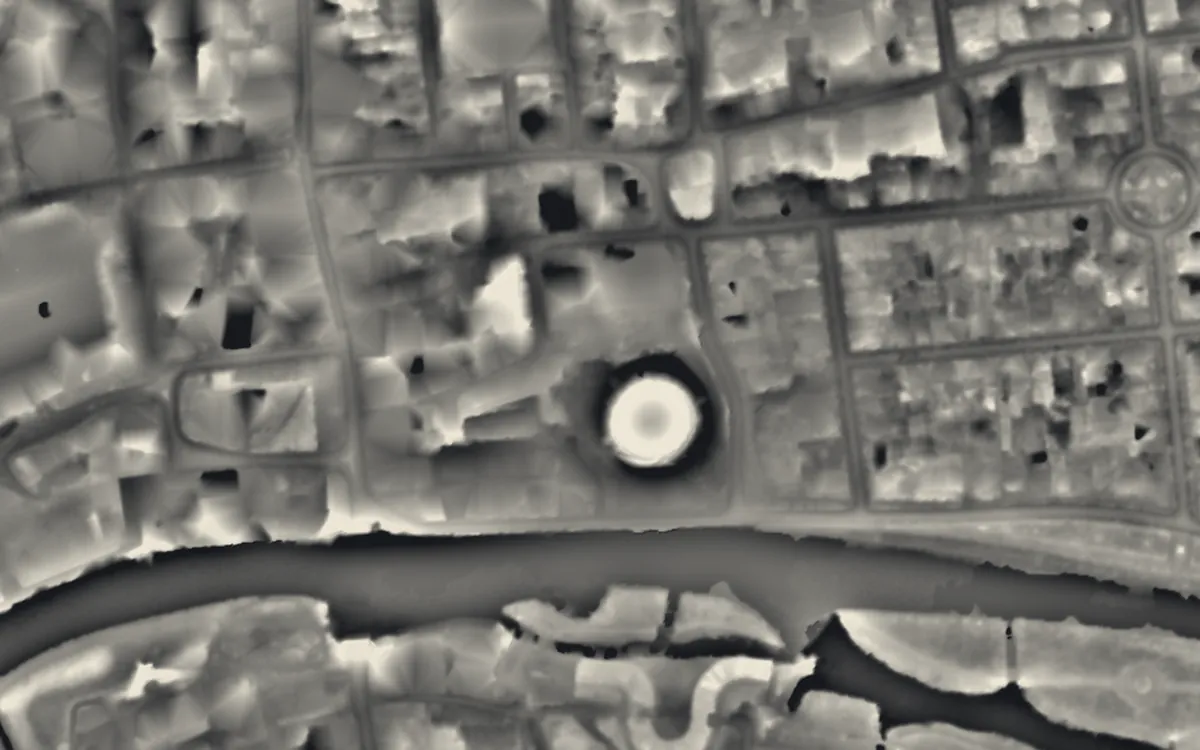 Bedford CastleBedfordshire
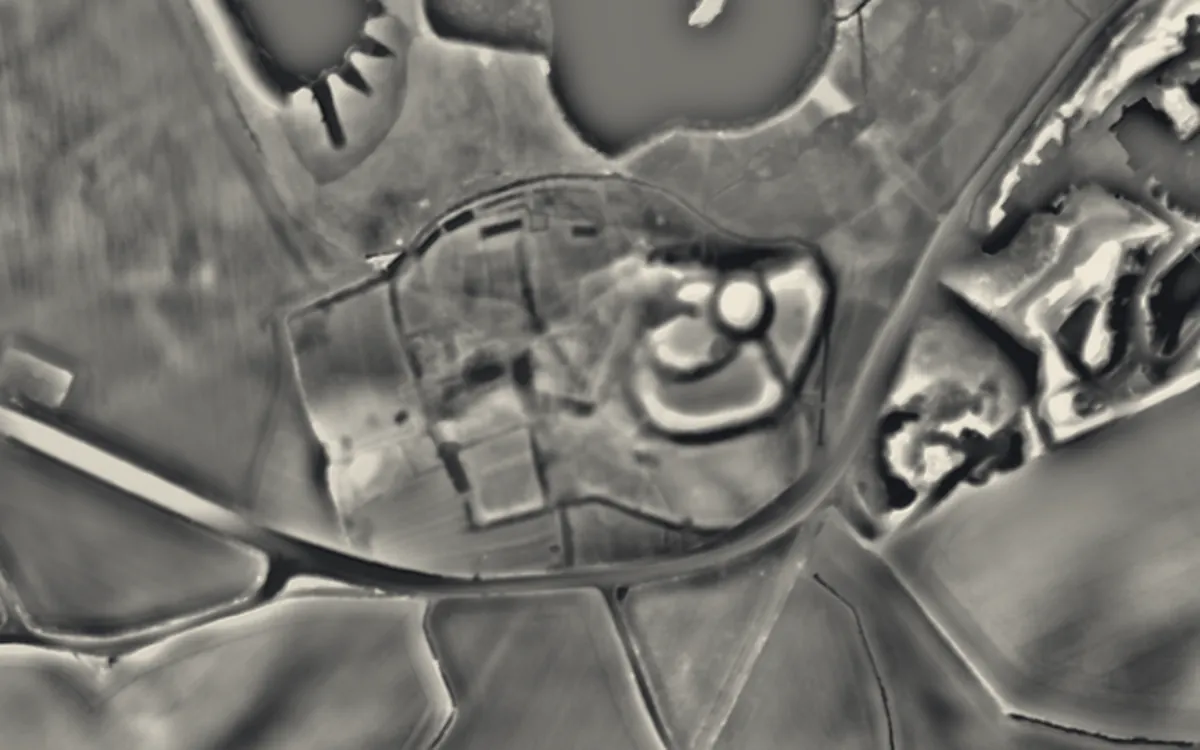 Cainhoe CastleBedfordshire
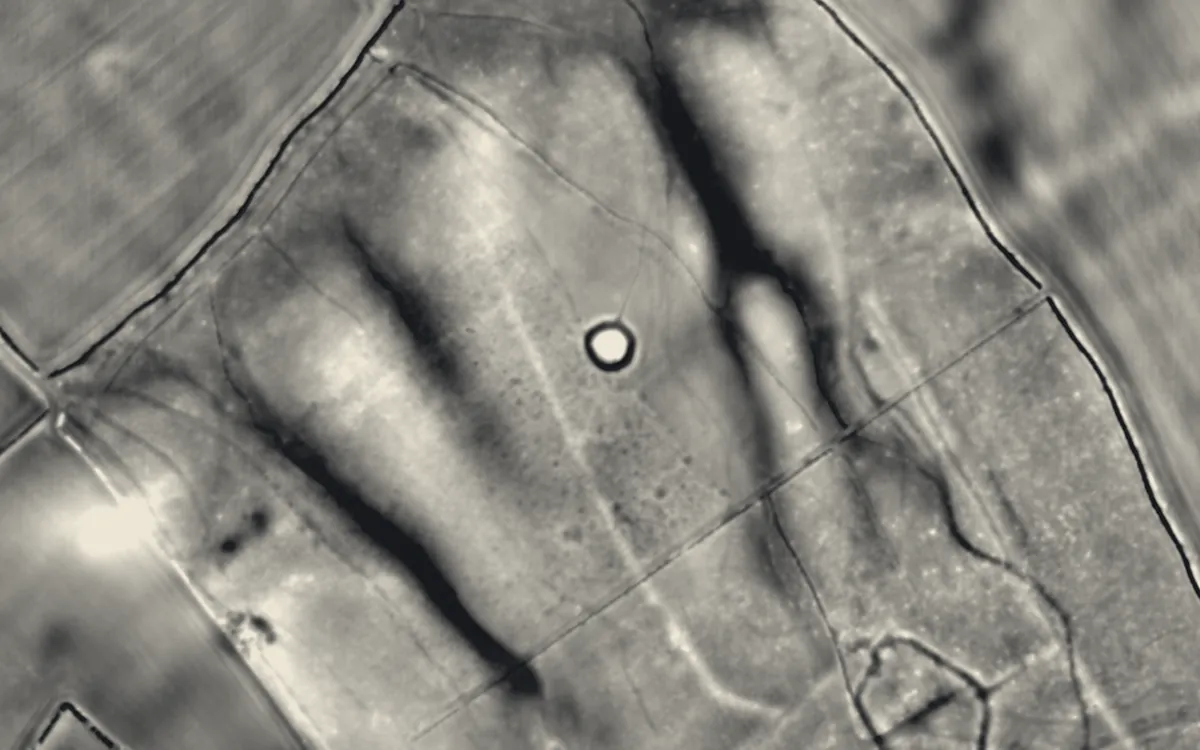 Eastcotts CastleBedfordshire
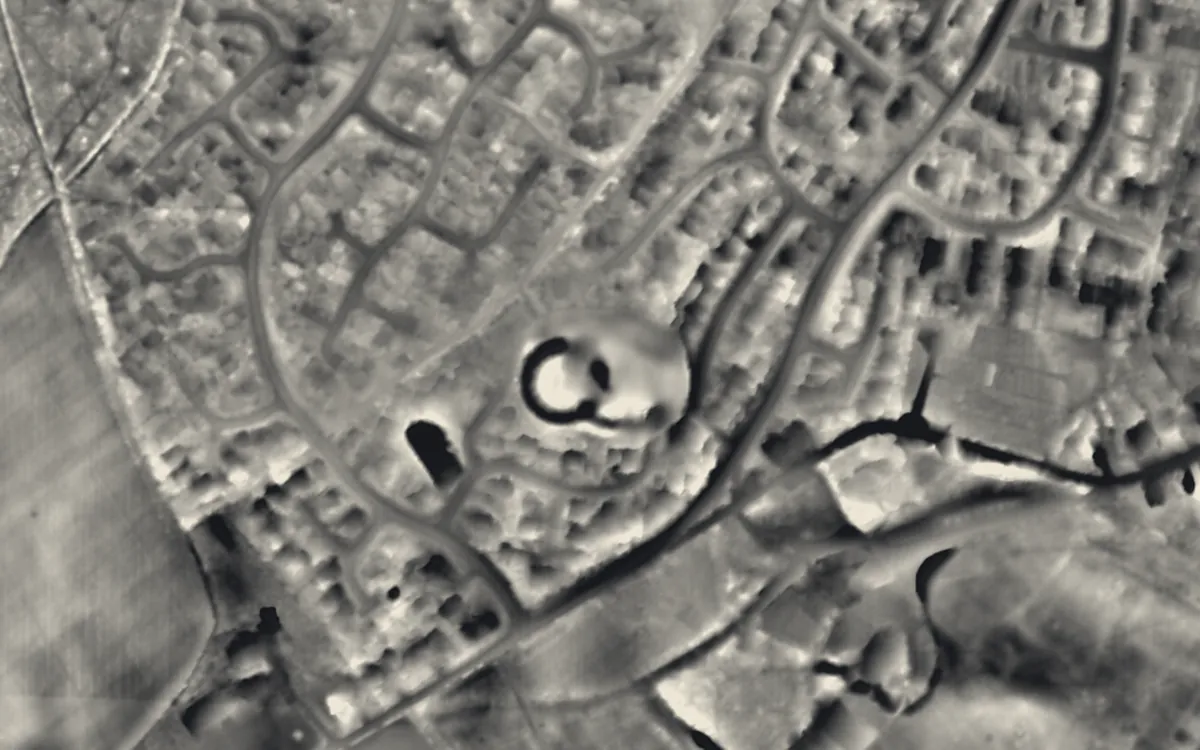 Flitwick CastleBedfordshire
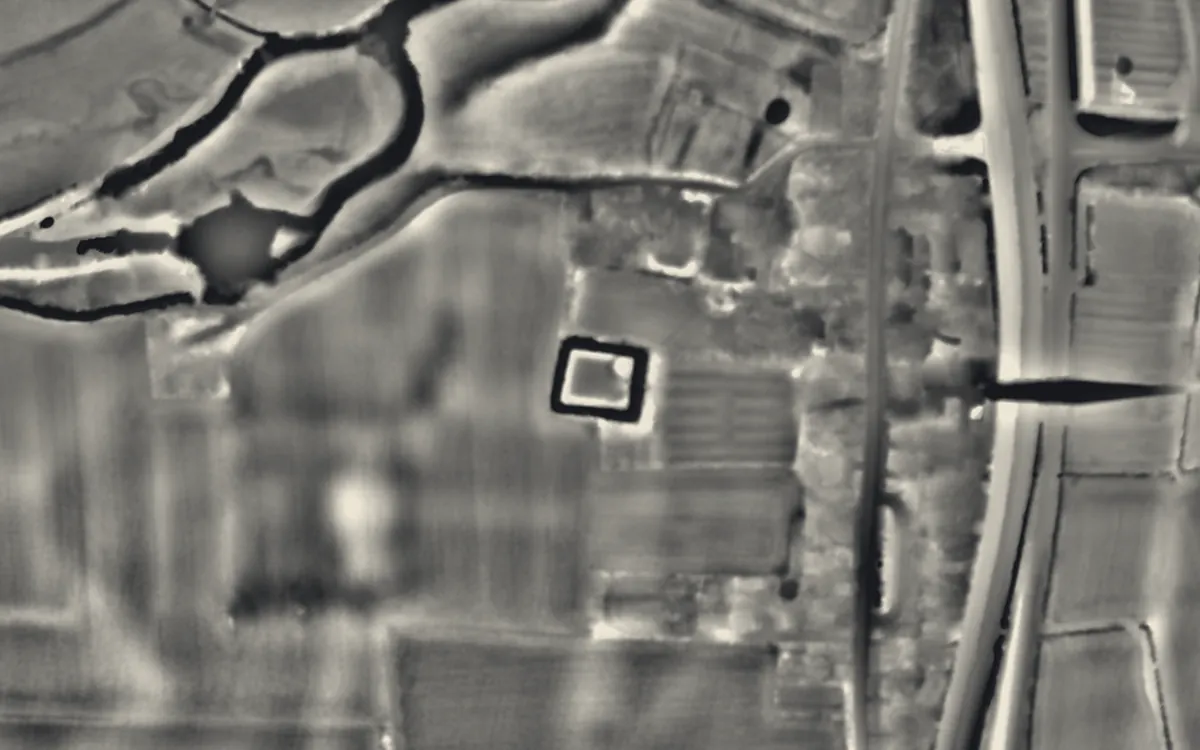 Gannocks CastleBedfordshire
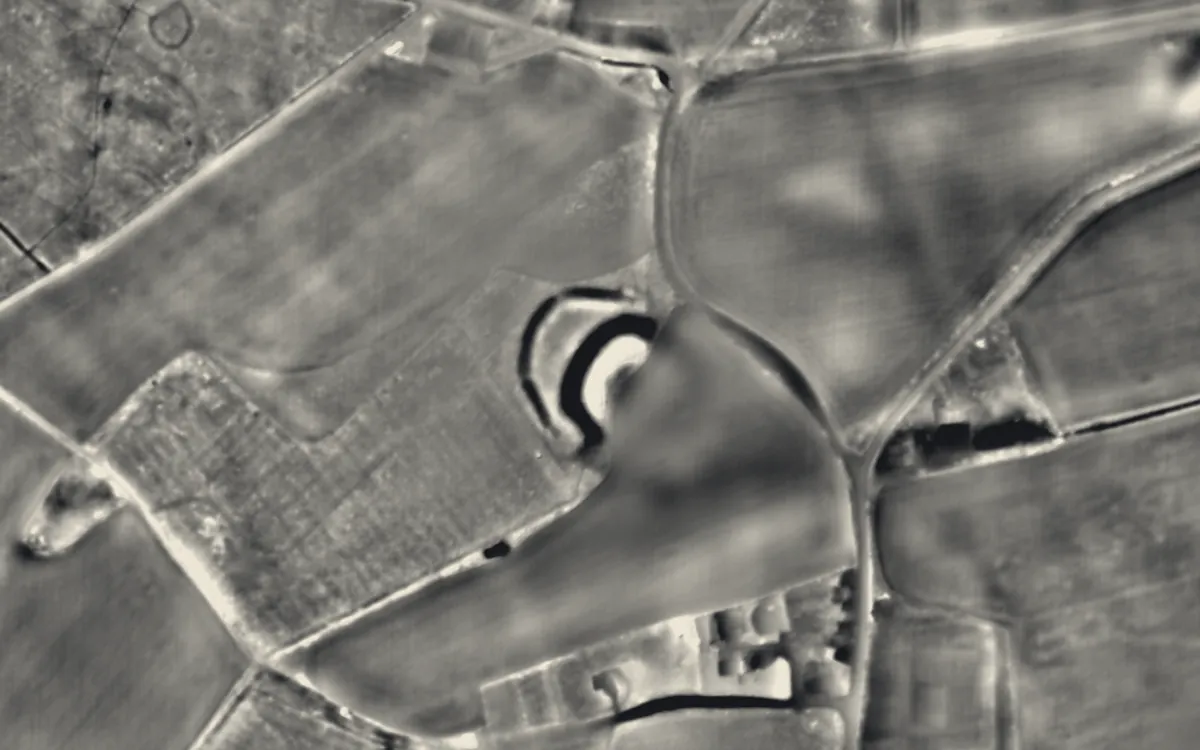 Old Warden CastleBedfordshire
Where they are
Counties with the most motte and bailey castles that have a page here.
- Powys33 with a page
- North Yorkshire22 with a page
- Shropshire19 with a page
- Kent17 with a page
- Somerset17 with a page
- Devon15 with a page
- Herefordshire15 with a page
- Northumberland15 with a page
- Cumbria14 with a page
- Cambridgeshire12 with a page
- Monmouthshire12 with a page
- Bedfordshire11 with a page
- Hampshire11 with a page
- Oxfordshire11 with a page
- Norfolk10 with a page
- Pembrokeshire10 with a page
- Carmarthenshire9 with a page
- Cornwall9 with a page
- Derbyshire9 with a page
- Gloucestershire9 with a page
- Lincolnshire9 with a page
- Suffolk9 with a page
- Essex8 with a page
- Warwickshire8 with a page
More examples
- Renhold CastleBedfordshire
- Thurleigh CastleBedfordshire
- Toddington CastleBedfordshire
- Totternhoe CastleBedfordshire
- Yielden CastleBedfordshire
- Hampstead Norris CastleBerkshire
- Windsor CastleBerkshire
- St Illtyd's MotteBlaenau Gwent
- Candleston CastleBridgend
- Coity CastleBridgend
- Kenfig CastleBridgend
- Llangynwyd CastleBridgend
- Newcastle CastleBridgend
- Bristol CastleBristol
- Bolbec CastleBuckinghamshire
- Castlethorpe CastleBuckinghamshire
- Cymbeline's CastleBuckinghamshire
- Hawridge Court ringworkBuckinghamshire
- Lavendon CastleBuckinghamshire
- Weston Turville CastleBuckinghamshire
- Caerphilly CastleCaerphilly
- Craig Ruperra MotteCaerphilly
- Morgraig CastleCaerphilly
- Ruperra CastleCaerphilly
- Buckden TowersCambridgeshire
- Burwell CastleCambridgeshire
- Cambridge CastleCambridgeshire
- Castle CampsCambridgeshire
- Cheveley CastleCambridgeshire
- Eaton Socon CastleCambridgeshire
Sources
- FISH Thesaurus of Monument Types (Historic England): Motte And Bailey
- FISH Thesaurus of Monument Types (Historic England): Motte
- FISH Thesaurus of Monument Types (Historic England): Bailey
- Monument Type Thesaurus (Wales), RCAHMW: Motte and Bailey
- Historic England, National Heritage List entry 1007749: 'The Castles' motte and bailey
- Historic England, National Heritage List entry 1011776: Motte and bailey castle 240m east of Dean's Mill
- Wikipedia: Motte-and-bailey castle (cross-check)
- Relief Visualization Toolbox documentation: Hillshading
Last updated 2026-10-16.