Home Monument types Roman marching camp
What is a roman marching camp?
A Roman marching camp is a temporary enclosure built by Roman troops on campaign or in training, defended by a single earthen rampart, probably topped by a palisade, and an outer ditch. Like forts, camps have straight sides and rounded corners, but they held tents rather than permanent buildings.
- Period
- Roman, from AD 43; many belong to the conquest campaigns of the 1st century AD.
- Also called
- temporary camp, Roman camp, practice camp, castra aestiva
- Pages on Waystone
- 39 in England and Wales
What a roman marching camp is
Most campaign camps were occupied only briefly, often overnight, and practice camps were built by soldiers in training. Historic England's scheduling texts note that camps have between one and four entrances, usually in the middle of the sides, although as many as eleven have been recorded. Historic England records around 140 camps in England, most in the Midlands and the North, including a series along Dere Street in Northumberland. For Wales and the Marches, Davies and Jones (2006) list only five camps of 12 to 20 hectares and three larger than 20 hectares; Llancayo near Usk, found from cropmarks in 2009 and 2011, encloses about 20.2 hectares and is probably earlier than AD 69. Most camps are known only from cropmarks on aerial photographs.
How roman marching camps look on LiDAR
Most marching camps have been ploughed flat and do not show on a bare-earth model. Where one survives, usually on moorland or in old pasture, it shows as a long, very low bank with a shallow ditch outside, enclosing a large rectangle with rounded corners, often with only one or two sides intact. A local relief model is the best view of the slight rampart, sky-view factor shows the ditch, and following the alignment can locate gateways and further lengths under later fields.
See LiDAR visualisations explained for what each method shows.
What can look like one
Field boundaries, enclosure-period hedge banks, park pales and the remains of later stock enclosures can form long straight banks with rounded corners. The large enclosed area, the slight bank and regularly placed gateways help to identify a camp.
Protection
Historic England considers all well-preserved Roman camps to be nationally important, and many are scheduled monuments protected in England by the Ancient Monuments and Archaeological Areas Act 1979 and in Wales by the Historic Environment (Wales) Act 2023.
Examples on the LiDAR
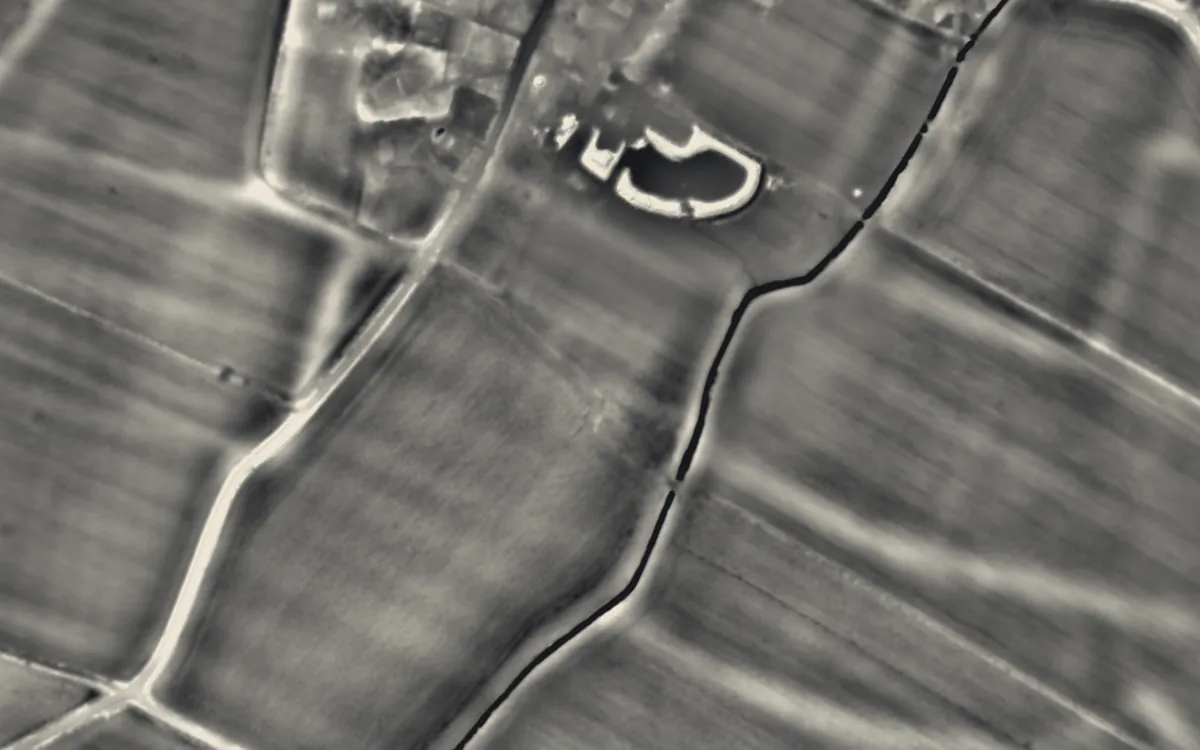 Totternhoe Roman villaBedfordshire
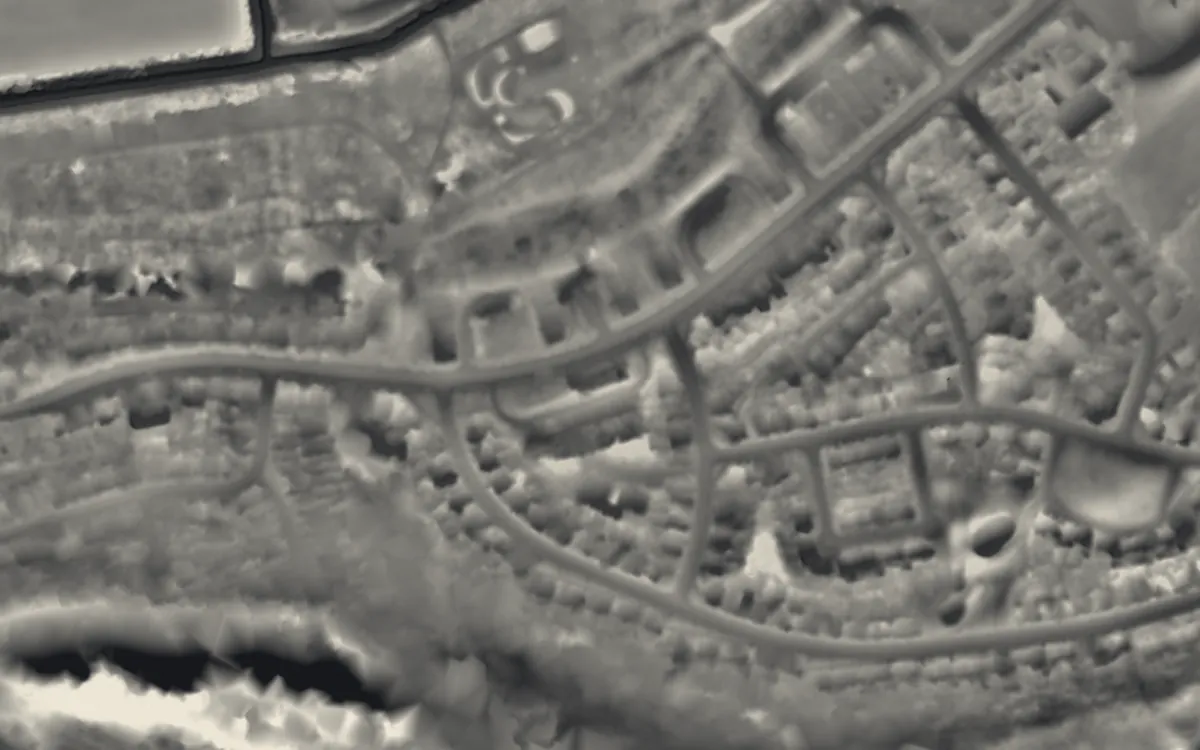 Kings Weston Roman VillaBristol
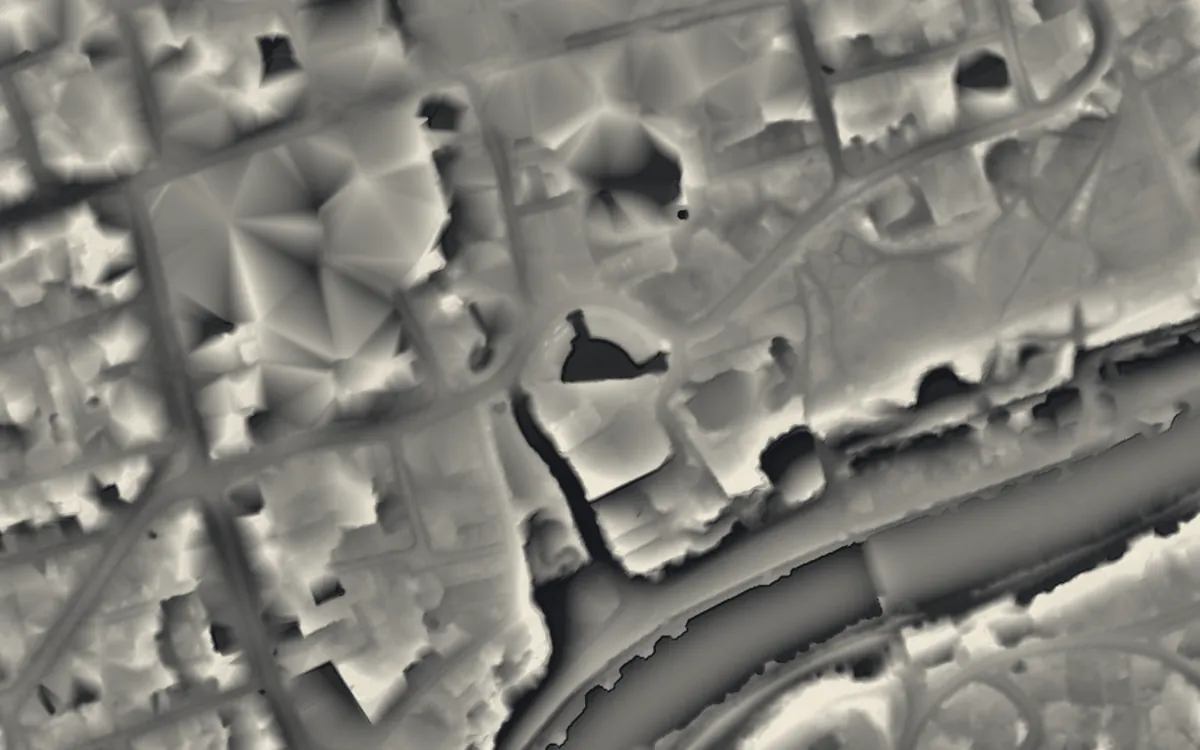 Chester Roman AmphitheatreCheshire
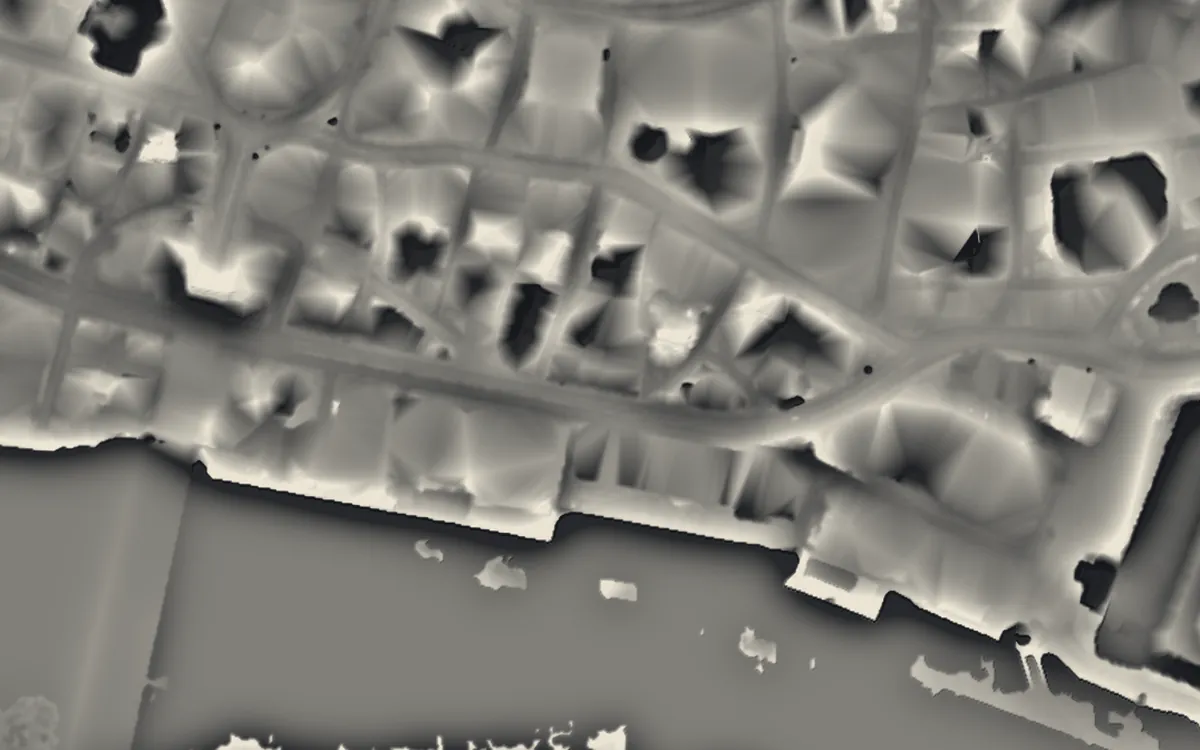 Billingsgate Roman House and BathsCity of London
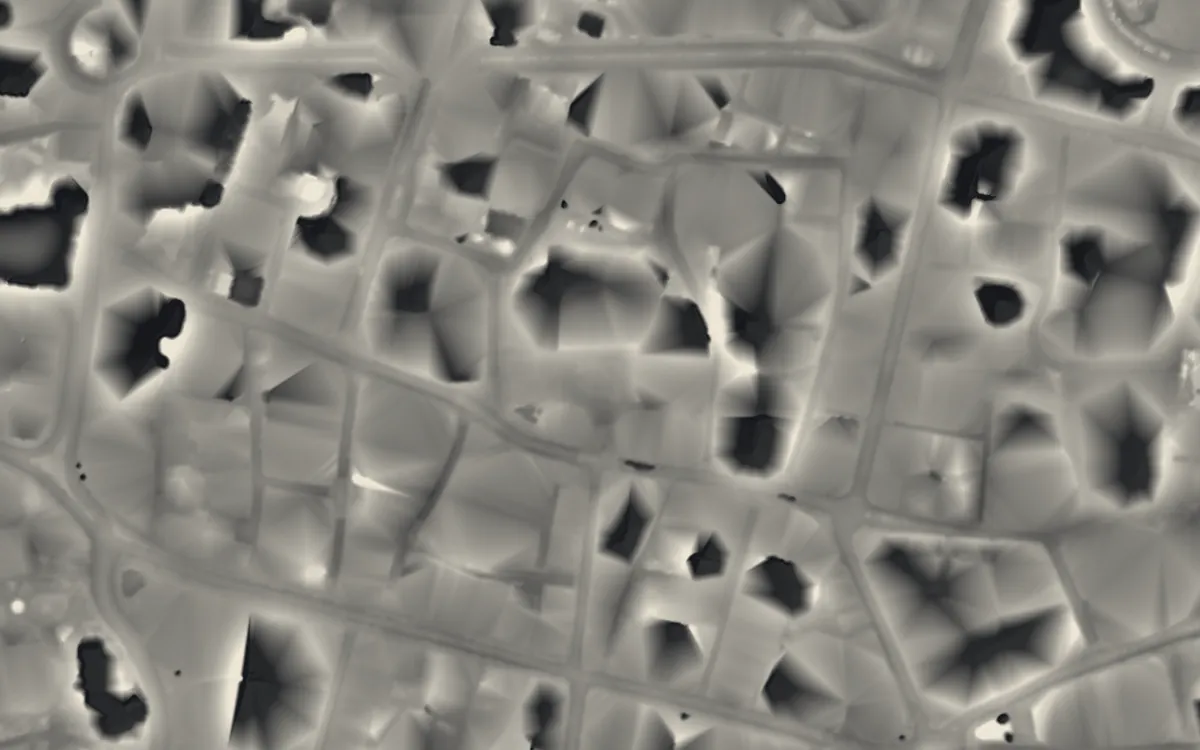 Roman amphitheatre, Guildhall YardCity of London
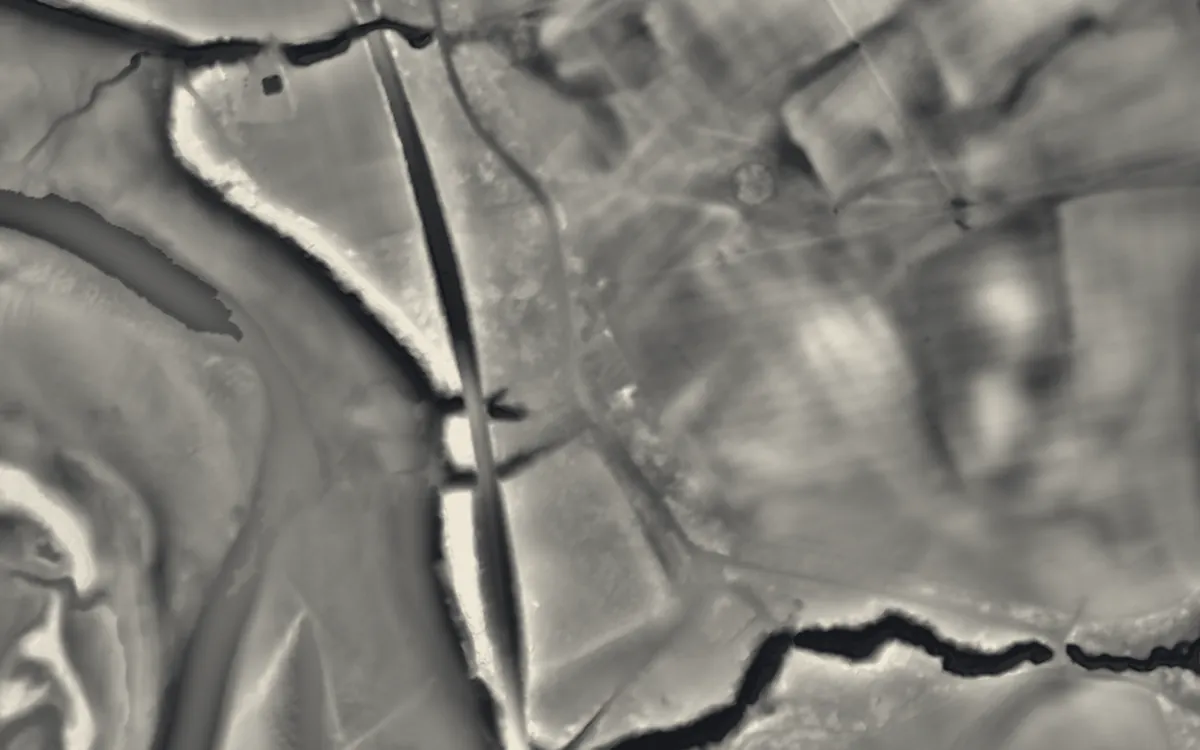 Ravenglass Roman Bath HouseCumbria
Where they are
Counties with the most roman marching camps that have a page here.
- Gloucestershire5 with a page
- Hertfordshire3 with a page
- City of London2 with a page
- East Riding of Yorkshire2 with a page
- Hampshire2 with a page
- Isle of Wight2 with a page
- Lincolnshire2 with a page
- North Yorkshire2 with a page
- Oxfordshire2 with a page
- West Sussex2 with a page
- Bedfordshire1 with a page
- Bristol1 with a page
- Cheshire1 with a page
- Cumbria1 with a page
- Derbyshire1 with a page
- Greater London1 with a page
- Norfolk1 with a page
- Northumberland1 with a page
- Nottinghamshire1 with a page
- Pembrokeshire1 with a page
- Rutland1 with a page
- Shropshire1 with a page
- Somerset1 with a page
- Staffordshire1 with a page
More examples
- Batham GateDerbyshire
- Romano-British villa at Cockle Pits, near BrantinghamEast Riding of Yorkshire
- Rudston Roman villaEast Riding of Yorkshire
- Chedworth Roman VillaGloucestershire
- Cirencester AmphitheatreGloucestershire
- Great Witcombe Roman VillaGloucestershire
- Spoonley Wood Roman villaGloucestershire
- Woodchester Roman VillaGloucestershire
- Crofton Roman VillaGreater London
- Calleva AtrebatumHampshire
- Rockbourne Roman VillaHampshire
- Gadebridge Park Roman VillaHertfordshire
- Lockleys Roman villaHertfordshire
- Welwyn Roman BathsHertfordshire
- Brading Roman VillaIsle of Wight
- Newport Roman VillaIsle of Wight
- Ancaster Roman townLincolnshire
- Roman villa immediately east of Horkstow HallLincolnshire
- Roman villa at Gayton ThorpeNorfolk
- Bainbridge Roman fort and annexeNorth Yorkshire
- Beadlam Roman villaNorth Yorkshire
- Lees Hall Roman campNorthumberland
- Margidunum Roman StationNottinghamshire
- Alchester Roman TownOxfordshire
- North Leigh Roman VillaOxfordshire
- Castle FlemishPembrokeshire
- Rutland Roman villaRutland
- Viroconium CornoviorumShropshire
- Low Ham Roman VillaSomerset
- LetocetumStaffordshire
Sources
- FISH Thesaurus of Monument Types (Historic England): Temporary Camp (Marching Camp)
- Monument Type Thesaurus (Wales), RCAHMW: Marching Camp
- Historic England, National Heritage List entry 1008882: reasons for designation (Roman camps)
- Historic England, National Heritage List entry 1011414: reasons for designation (Roman camps)
- Coflein (RCAHMW): Llancayo Farm Roman Marching Camp, Gwehelog, Usk, NPRN 409178
- Wikipedia: Castra (temporary and permanent camps) (cross-check)
- Relief Visualization Toolbox documentation: Simple local relief model
Last updated 2026-10-16.