Home Monument types Bell pit
What is a bell pit?
A bell pit is a shallow mine in which a shaft was sunk to a seam of coal, ironstone or another mineral near the surface and then widened at the bottom, giving a bell-shaped profile. When a pit became unsafe it was abandoned and a new one dug nearby, so bell pits usually occur in groups or lines along a seam.
- Period
- Medieval and post-medieval; a few were still worked in the early 20th century.
- Also called
- bell-pit, shaft mound, coal pit, ironstone pit
- Pages on Waystone
- 62 in England and Wales
What a bell pit is
Bell pits were used in the medieval period and later, and a few remained in use into the early 20th century around Ford in Northumberland. Spoil raised from the shaft was dumped around its mouth, forming a ring-shaped mound, and the shaft later collapsed or was filled, leaving a hollow in the centre. Historic England's scheduling of Alnwick Moor in Northumberland covers at least 100 pits and shafts of the 16th and 17th centuries spread over about 35 hectares, some with collars of spoil and with gin circles nearby. Bell pits recovered only part of the mineral and often flooded, so each pit had a short working life.
How bell pits look on LiDAR
Bell pits show as clusters or lines of small circular mounds of spoil, each with a hollow in the centre, so that each looks like a small ring. Sky-view factor and negative openness show the central hollows as dark spots, and positive openness or a local relief model shows the spoil rings. Lines of pits often follow the outcrop of a seam along the contour, and they survive best in woodland and on moorland where later farming has not levelled them.
See LiDAR visualisations explained for what each method shows.
What can look like one
Natural shake holes and sinkholes in limestone, bomb craters, small quarry pits, marl pits and round barrows with robbed centres can look like bell pits. Bell pits usually occur in dense groups or lines, with a raised spoil ring around each hollow.
Protection
Some well-preserved groups of bell pits, such as those on Alnwick Moor, are scheduled monuments, protected in England by the Ancient Monuments and Archaeological Areas Act 1979 and in Wales by the Historic Environment (Wales) Act 2023, but most are not designated.
Examples on the LiDAR
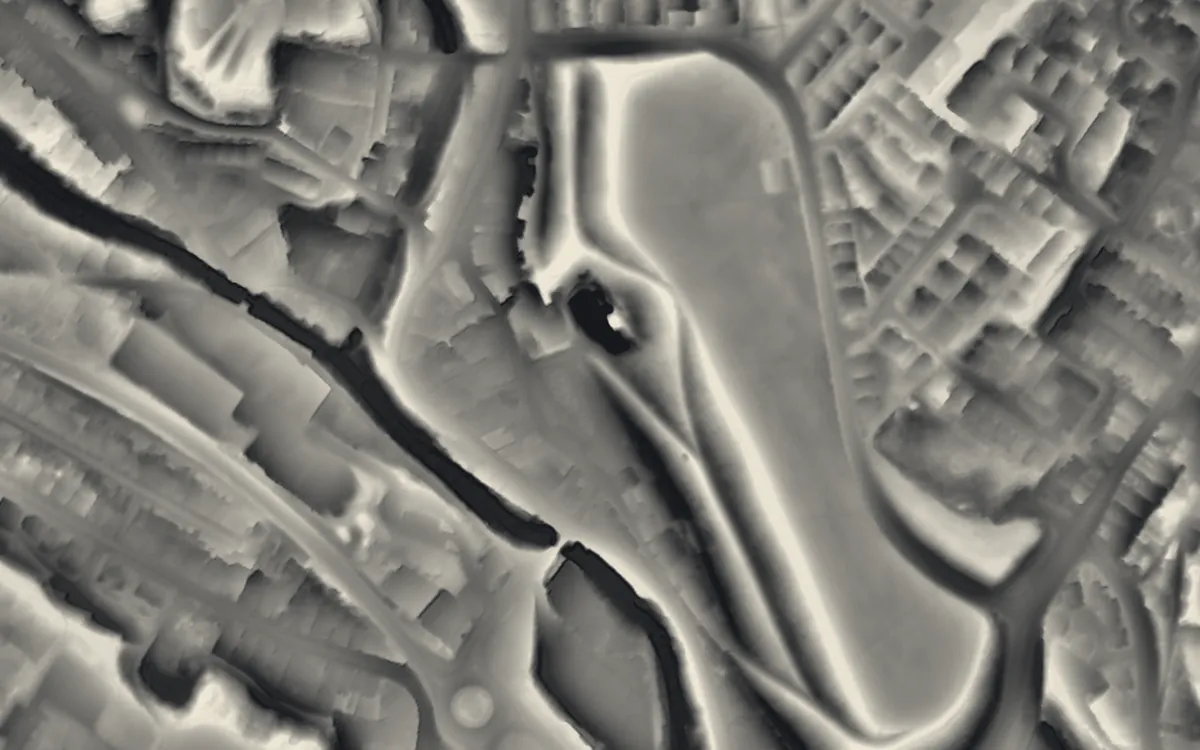 Tredegar IronworksBlaenau Gwent
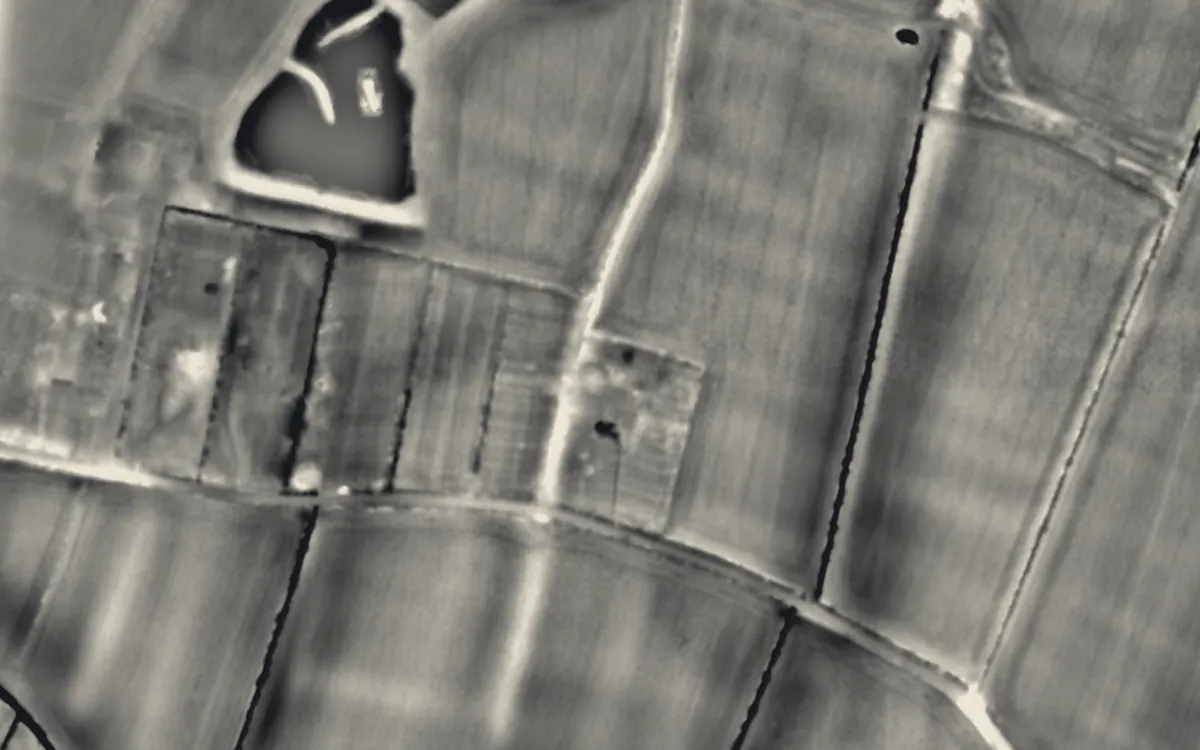 Bourn WindmillCambridgeshire
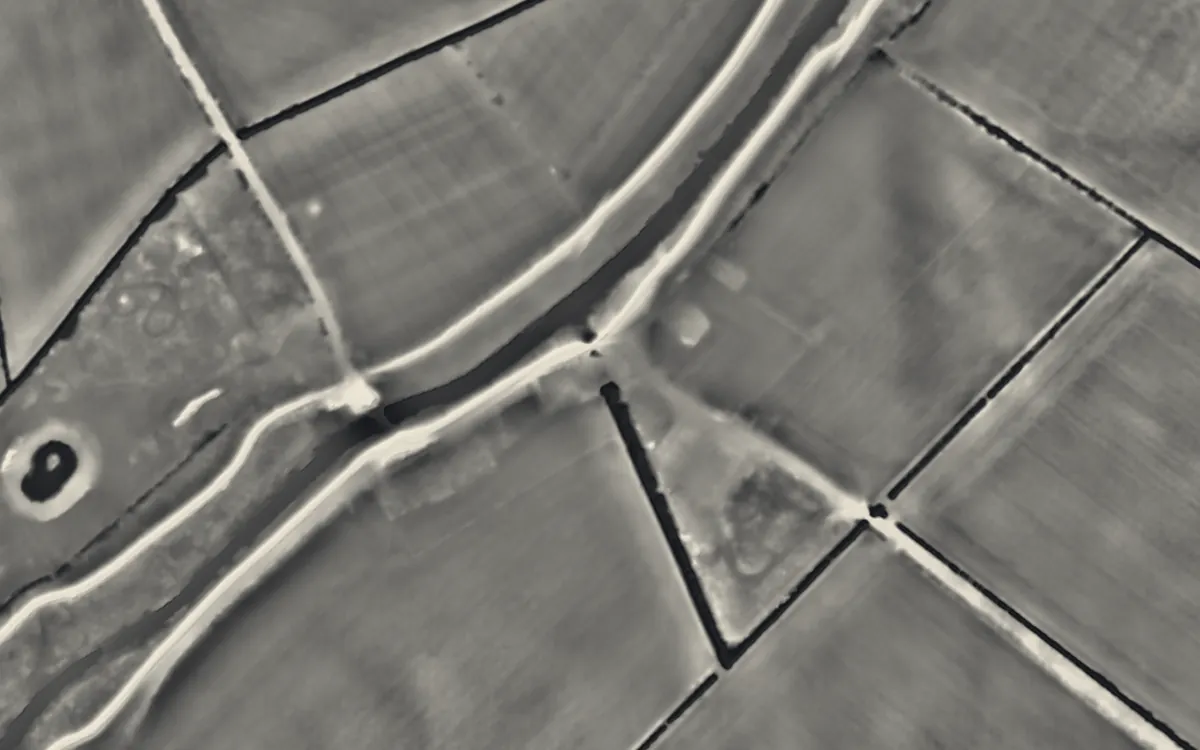 Stretham Old EngineCambridgeshire
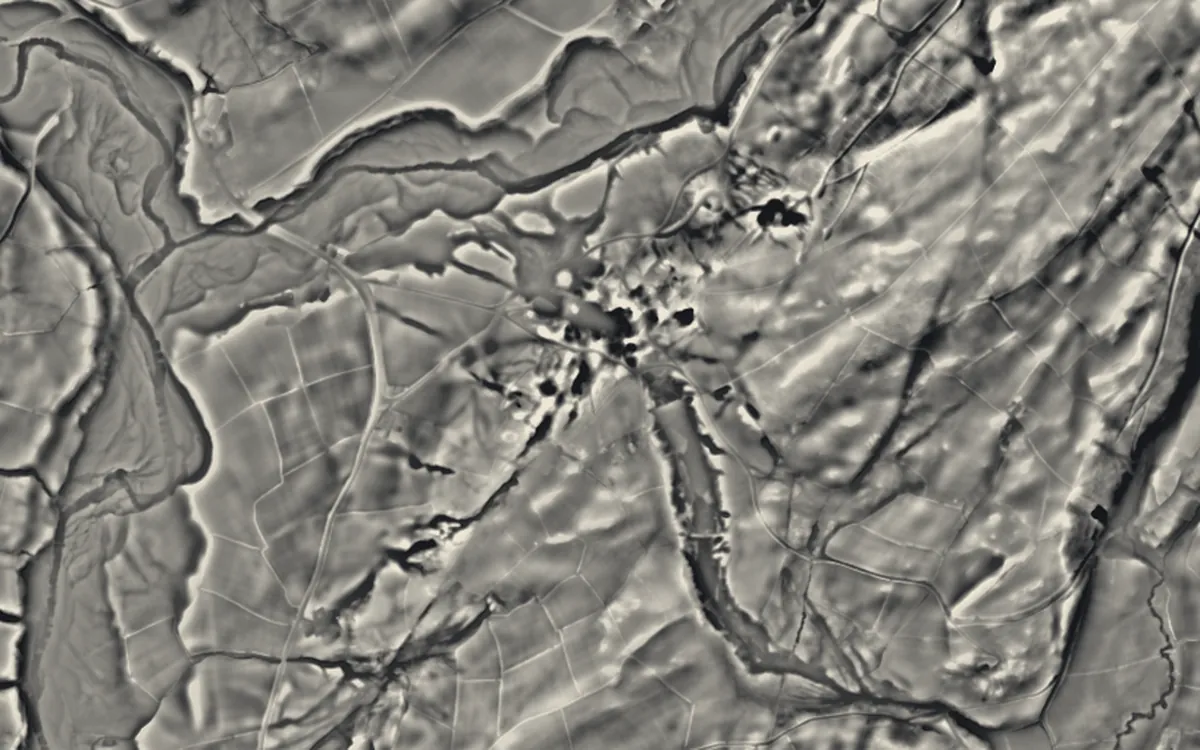 Dolaucothi Gold MinesCarmarthenshire
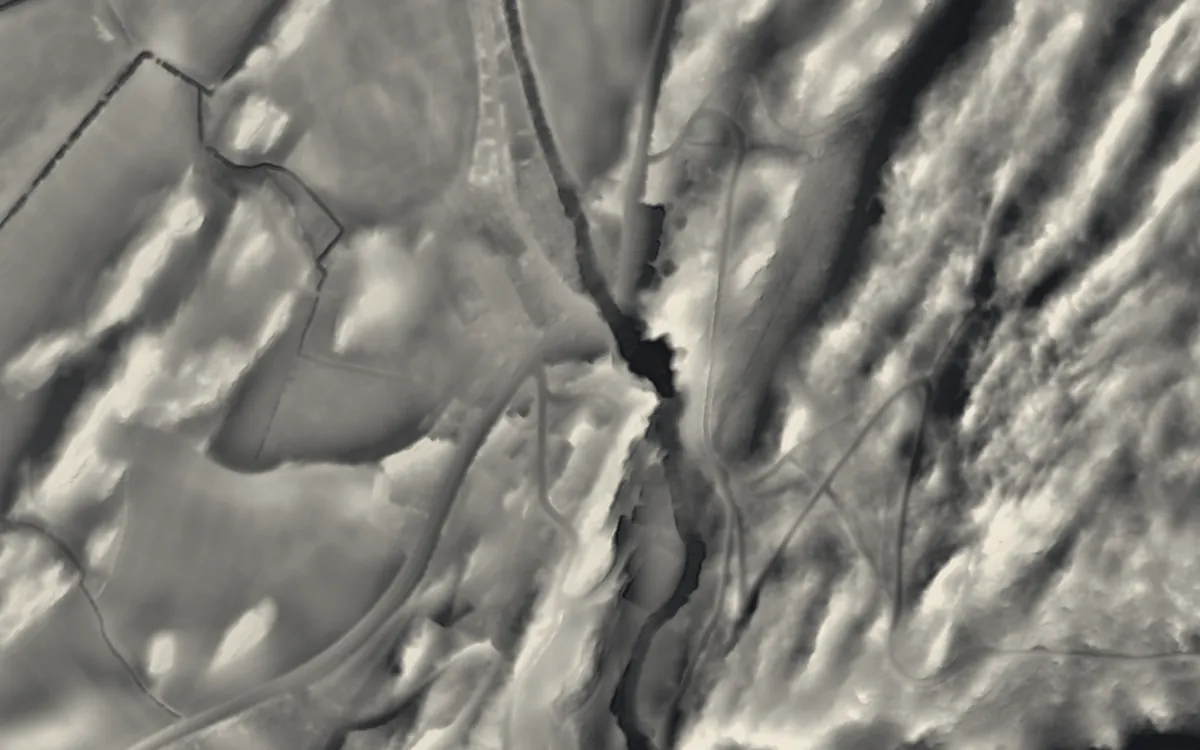 Dyfi FurnaceCeredigion
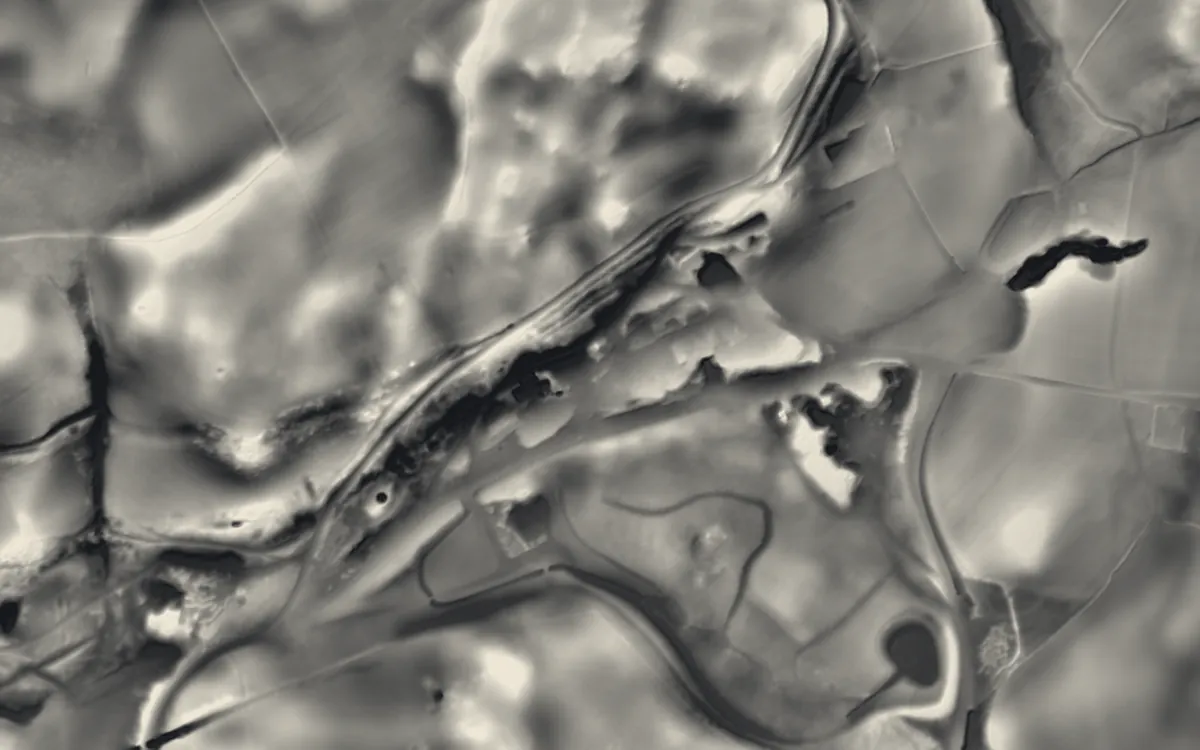 Frongoch MineCeredigion
Where they are
Counties with the most bell pits that have a page here.
- Gwynedd8 with a page
- Derbyshire6 with a page
- Cornwall4 with a page
- North Yorkshire4 with a page
- Ceredigion3 with a page
- Essex3 with a page
- Somerset3 with a page
- South Yorkshire3 with a page
- Cambridgeshire2 with a page
- Conwy2 with a page
- Cumbria2 with a page
- Leicestershire2 with a page
- Lincolnshire2 with a page
- Norfolk2 with a page
- Staffordshire2 with a page
- Suffolk2 with a page
- Blaenau Gwent1 with a page
- Carmarthenshire1 with a page
- Devon1 with a page
- East Riding of Yorkshire1 with a page
- Gloucestershire1 with a page
- Hampshire1 with a page
- Pembrokeshire1 with a page
- Powys1 with a page
More examples
- Llywernog MineCeredigion
- Klondyke Lead MineConwy
- Penmachno QuarryConwy
- East Pool MineCornwall
- Geevor Tin MineCornwall
- Wheal BusyCornwall
- Wheal TrewavasCornwall
- Coniston copper minesCumbria
- Haig CollieryCumbria
- Gautries RakeDerbyshire
- Lumford MillDerbyshire
- Magpie MineDerbyshire
- Odin Mine nucleated lead mine and ore works, 350m WNW of Knowlegates FarmDerbyshire
- Pleasley CollieryDerbyshire
- Tideslow Rake lead rake and lime kilnDerbyshire
- Eylesbarrow MineDevon
- Hessle Whiting MillEast Riding of Yorkshire
- Bocking WindmillEssex
- Bourne MillEssex
- Stansted Mountfitchet WindmillEssex
- Ram Hill CollieryGloucestershire
- Cwmorthin QuarryGwynedd
- Dinorwic QuarryGwynedd
- Diphwys Casson QuarryGwynedd
- Dorothea QuarryGwynedd
- Pen-yr-Orsedd QuarryGwynedd
- Penrhyn Quarry RailwayGwynedd
- Rhiwbach QuarryGwynedd
- Wrysgan QuarryGwynedd
- Portsmouth Block MillsHampshire
Sources
- FISH Thesaurus of Monument Types (Historic England): Bell Pit
- FISH Thesaurus of Monument Types (Historic England): Shaft Mound
- Monument Type Thesaurus (Wales), RCAHMW: Bell Pit
- Historic England, National Heritage List entry 1006419: Alnwick Moor bell pits
- Co-Curate (Newcastle University): Alnwick Moor bell pits - Scheduling
- Wikipedia: Bell pit (cross-check)
- Relief Visualization Toolbox documentation: Sky-view factor
- Relief Visualization Toolbox documentation: Openness
Last updated 2026-10-16.